# How to Plan the Ultimate Journey to Explore the Wonders of Morocco Today
The enchanting kingdom of Morocco offers an unparalleled travel experience that seamlessly bridges the ancient and the modern worlds. From the labyrinthine alleys of historic imperial cities to the vast, silent expanses of the golden Sahara Desert, this North African gem captivates the senses like nowhere else on earth. Deciding to visiter maroc is the first step toward a transformative adventure filled with rich cultural encounters, breathtaking diverse landscapes, and world-class hospitality. It is a destination that appeals equally to history buffs, outdoor adventurers, culinary enthusiasts, and luxury travelers looking for a truly unique escape.
Understanding how to navigate this vibrant country efficiently ensures that your journey is both smooth and deeply fulfilling. Morocco is a land of profound contrasts, where snow-capped mountains look down upon sun-drenched coastal towns and ancient traditions thrive alongside contemporary infrastructure. By preparing your itinerary thoughtfully, you can immerse yourself fully in the local rhythm, discovering the hidden gems and iconic highlights that define the country. Let us dive into the ultimate comprehensive roadmap to making your Moroccan travel dreams a magnificent reality.
## **Choosing the Ideal Season for Your Moroccan Adventure**
Timing is everything when you plan to [visiter maroc](https://circuitmarrakechmaroc.com/tours/circuit-de-marrakech-au-desert-8-jours), as the country experiences vastly different climates across its geographical regions. The spring months, stretching from March to May, along with the autumn months of September to November, are widely considered the most pleasant times to visit. During these shoulder seasons, the weather is comfortably warm throughout most of the country, making it ideal for walking tours through the imperial cities and trekking in the Atlas Mountains. The searing heat of the summer desert has either not yet arrived or has finally begun to dissipate, allowing for comfortable exploration.
If you choose to visit during the winter, you will find crisp, clear days that are perfect for exploring the bustling southern markets, though temperatures can drop significantly during the night, especially in the desert and mountain regions. Summer, on the other hand, brings intense heat to inland areas like Marrakech and Fez, where temperatures often exceed forty degrees Celsius. However, the coastal regions, including Casablanca, Rabat, and Essaouira, remain delightfully temperate during the summer months due to refreshing Atlantic breezes, offering an excellent alternative for warm-weather travelers.
### **Navigating the Cultural Calendar**
Beyond the weather, aligning your travel plans with Morocco's cultural and religious calendar can add an extraordinary layer of depth to your journey. The holy month of Ramadan, observed by Muslims worldwide, shifts slightly every year based on the lunar calendar. Visiting Morocco during Ramadan offers a unique glimpse into the spiritual heart of the nation, as cities come alive with festive energy after sunset, and families gather to break their fast with traditional treats.
However, travelers should be aware that business hours may be reduced during the day, and some restaurants may remain closed until dusk. If you prefer a more standard sightseeing experience with full daytime amenities, planning your trip outside of major religious observances might be more practical. Alternatively, timing your visit to coincide with famous cultural celebrations, such as the Gnaoua World Music Festival in Essaouira or the Rose Festival in Kelaat M'gouna, can provide unforgettable memories of local music and artistry.
### **Essential Packing Strategies for All Regions**
Packing for a diverse terrain requires a strategic approach to clothing and gear. Because Morocco is a Muslim-majority country with deeply ingrained traditional values, dressing modestly is highly recommended to show respect and ensure comfortable interactions. Loose, breathable fabrics like linen and cotton are ideal for staying cool while keeping shoulders and knees covered during your urban explorations.
It is also highly advisable to pack versatile layers, as temperatures can fluctuate dramatically between daytime sun and nighttime chill, particularly if your itinerary includes a night in a Saharan desert camp or a trek through high-altitude Berber villages. Sturdy, broken-in walking shoes are an absolute necessity for navigating the uneven cobblestones of the old medinas, while a lightweight scarf can protect against both intense desert sun and swirling sand.
## **Exploring the Must-Visit Imperial Cities and Coastal Towns**
No journey to the kingdom is complete without exploring the historical anchors known as the imperial cities, each of which has served as the capital of the nation at various points in history. Marrakech, often called the Red City, is a sensory explosion of color, sound, and aroma. The heart of the city beats in Jemaa el-Fnaa, a massive public square that transforms every evening into an open-air theater filled with storytellers, musicians, and food stalls. Nearby, the towering Koutoubia Mosque and the intricate Bahia Palace showcase the pinnacle of Moroccan architectural mastery.
Further north lies Fez, the cultural and spiritual soul of Morocco, which boasts the world's largest contiguous car-free urban area. Walking through the ancient medina of Fez el-Bali feels like stepping back into the medieval era, with artisans hammering copper, weaving textiles, and tanning leather using methods passed down through generations. Rabat, the current capital, offers a much calmer, more organized atmosphere, blending elegant French colonial avenues with the historic Kasbah of the Udayas, which overlooks the Atlantic Ocean.
### **The Coastal Allure of the Atlantic and Mediterranean**
After immersing yourself in the intense energy of the imperial cities, retreating to the coast provides a refreshing change of pace. Essaouira, an ancient fortified port town on the Atlantic coast, is famous for its relaxed bohemian vibe, whitewashed buildings with bright blue shutters, and world-class windsurfing conditions. The town's historic medina is enclosed by dramatic stone ramparts that offer sweeping views of the crashing ocean waves and the bustling fishing harbor below.
For a mix of modern luxury and maritime history, Tangier serves as the northern gateway where the Mediterranean Sea meets the Atlantic Ocean. This cosmopolitan city has long inspired international artists, writers, and musicians with its unique blend of Moroccan, Spanish, and French influences. Strolling through the vibrant Marshan neighborhood or sipping mint tea at a historic cafe overlooking the harbor reveals a city that is proudly reinventing itself for the modern era while honoring its eclectic past.
+-------------------+-----------------------+-----------------------+
| City Destination | Primary Attraction | Recommended Vibe |
+-------------------+-----------------------+-----------------------+
| Marrakech | Jemaa el-Fnaa Square | High Energy & Vibrant |
| Fez | Chouara Tannery | Historic & Spiritual |
| Essaouira | Seafront Ramparts | Relaxed & Artistic |
| Chefchaouen | Blue-Washed Streets | Picturesque & Serene |
+-------------------+-----------------------+-----------------------+
### **The Serenity of the Northern Mountains**
Tucked away in the Rif Mountains of northern Morocco, the captivating town of Chefchaouen is a dream destination for photographers and travelers seeking tranquility. Known worldwide for its striking buildings painted in endless shades of blue, this mountain town offers a remarkably peaceful contrast to the larger metropolitan areas. The distinct blue hue is said to symbolize the sky and heaven, reminding residents and visitors alike to focus on spiritual awareness.
Exploring Chefchaouen involves wandering leisurely through its quiet, winding streets, shopping for unique local handicrafts like wool garments and woven blankets, and hiking up to the Spanish Mosque for a panoramic view of the sunset over the valley. The gentle pace of life here encourages mindfulness, making it the perfect mid-trip stop to recharge your batteries before heading south toward the rugged landscapes of the desert.
## **Navigating the Majestic Landscapes of the Sahara and Atlas**
The dramatic natural beauty of the Moroccan interior is anchored by the mighty Atlas Mountain range, which splits the country into distinct ecological zones. The High Atlas region is home to Jebel Toubkal, the highest peak in North Africa, attracting hikers and mountaineers from all corners of the globe. Even if you are not an experienced climber, taking a day trip to the lush Ourika Valley or the traditional mountain village of Imlil allows you to experience the legendary hospitality of the indigenous Berber people, who have inhabited these peaks for millennia.
As you travel across the mountain passes, the green valleys gradually give way to arid, rocky plains, leading you toward the spectacular Todra and Dades Gorges. These massive limestone canyons feature sheer rock faces that rise hundreds of meters into the air, creating a dramatic corridor for travelers and rock climbers alike. The road winding through the Dades Valley offers spectacular panoramic viewpoints over terraced riverbeds and ancient mud-brick fortresses, known locally as kasbahs.
### **Journeying into the Dunes of Erg Chebbi**
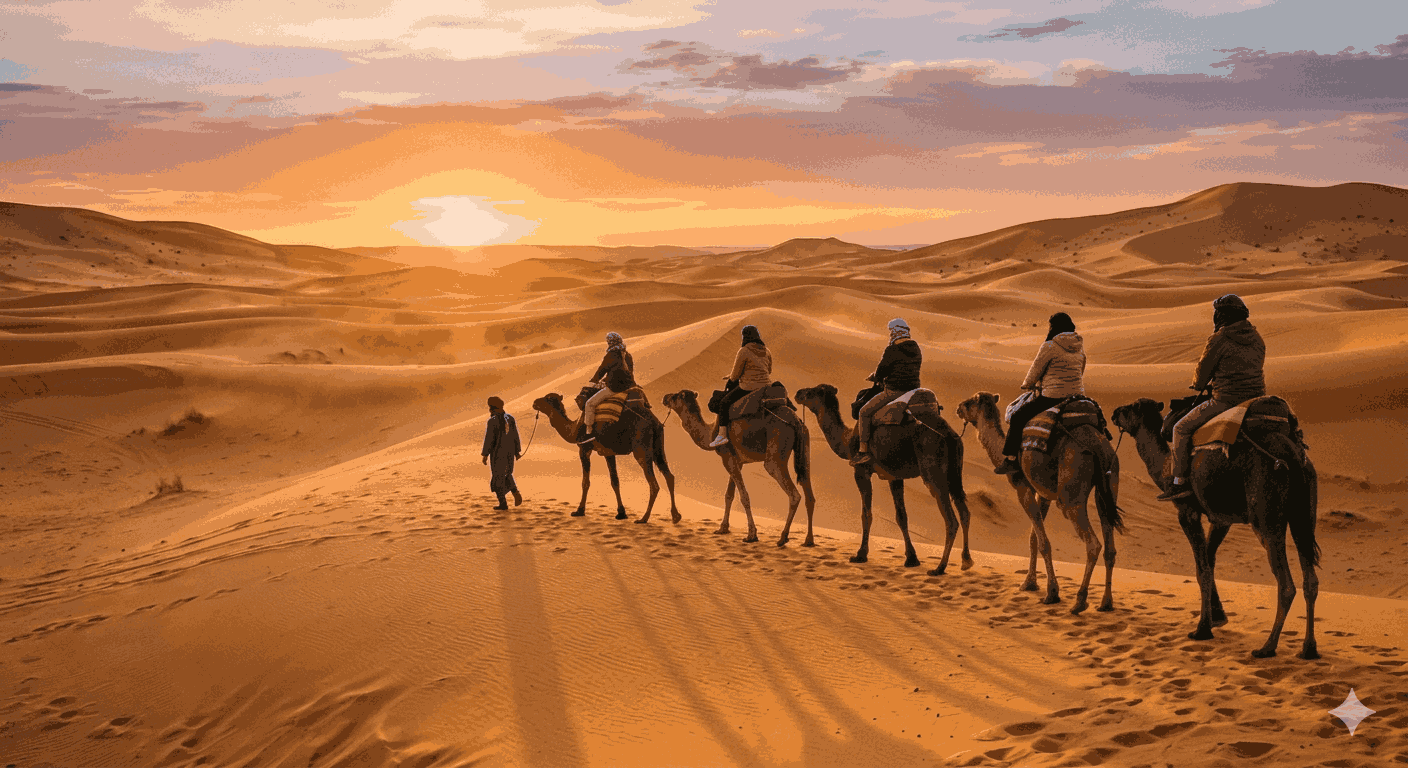
The ultimate highlight for many who choose to visiter maroc is venturing into the rolling sand dunes of the Sahara Desert. The most accessible and dramatic dune fields are found at Erg Chebbi near the small town of Merzouga. Here, giant dunes of orange sand rise like frozen waves against the horizon, shifting shape constantly with the desert winds. To experience the magic fully, embarking on a camel trek at late afternoon allows you to witness the sand changing color under the glow of the setting sun.
Spending a night in a traditional desert camp under a canopy of countless stars is an experience that words can hardly do justice. Local Berber hosts treat travelers to hearty tagines, sweet mint tea, and traditional drumming music around a crackling campfire. Waking up early the next morning to watch the sunrise paint the desert in soft pastel shades offers a moment of profound peace that stays with you long after you return to civilization.
+-----------------------------------------------------------------------+
| SAHARA DESERT EXCURSION CHECKLIST |
+-----------------------------------------------------------------------+
| Item Category | Specific Recommendations |
+-----------------------------------------------------------------------+
| Footwear | Closed-toe shoes for trekking; sandals for |
| | relaxing around the camp area. |
| Sun Protection | Biodegradable sunscreen, polarized sunglasses|
| | and a wide-brimmed sun hat. |
| Electronics | Fully charged power bank; dust-proof bags |
| | to protect cameras from fine desert sand. |
| Hydration | Sufficient bottled drinking water for the |
| | entire duration of the desert trek. |
+-----------------------------------------------------------------------+
### **Unveiling the Hollywood of Morocco**
On the edge of the desert lies Ouarzazate, a city celebrated as the gateway to the Sahara and the undisputed center of the Moroccan film industry. The surrounding arid landscapes and ancient architecture have served as the backdrop for iconic global films and television series, including Gladiator, Lawrence of Arabia, and Game of Thrones. Visiting the local Atlas Film Studios offers a fascinating look at the massive sets built right in the middle of the desert.
Just a short drive from the town center stands Ait Benhaddou, a breathtaking fortified village that is recognized as a UNESCO World Heritage site. This magnificent example of Moroccan earthen clay architecture consists of a group of earthen buildings surrounded by high walls, reinforced by corner towers. Walking up through the narrow interior passages to the granary at the top of the hill rewards you with an panoramic view of the Ounila River valley, transporting you straight into a scene from ancient history.
## **Mastering Practical Travel Logistics and Cultural Etiquette**
To ensure a seamless journey as you explore the country, mastering a few basic travel logistics can save you time and prevent unnecessary stress. The local currency is the Moroccan Dirham, and while credit cards are widely accepted in major hotels, modern supermarkets, and high-end restaurants, cash remains king in the traditional souks and small villages. It is always wise to keep a supply of small-denomination coins and notes on hand for tipping, paying taxi drivers, and purchasing small street snacks.
Getting around Morocco is remarkably efficient thanks to an extensive public transportation network. A high-speed train line, known as the Al Boraq, connects Tangier, Rabat, and Casablanca, cutting travel times significantly between these major hubs. For routes not covered by the rail network, comfortable long-distance buses operated by companies like CTM offer reliable service, while shared intercity taxis, known as grand taxis, provide a more flexible, authentic way to travel between smaller towns.
### **The Art of Haggling and Souk Commerce**
Shopping in a traditional Moroccan souk is a vibrant, theatrical experience that requires an open mind and a friendly attitude. Bargaining is a fundamental part of local commerce, and the initial price quoted by a vendor is rarely the amount they expect to receive. When you find an item you love, whether it is a hand-woven rug, an ornate brass lantern, or a bag of fragrant spices, approach the negotiation as a lighthearted conversation rather than a confrontation.
"Bargaining in Morocco is not about winning or losing; it is a social interaction built on mutual respect and finding a fair value that leaves both the buyer and seller smiling at the end of the deal."
A good rule of thumb is to counter with roughly half of the original asking price and work your way up gradually from there. Maintaining a polite, smiling demeanor throughout the process often yields the best discounts; if the price does not reach a level you are comfortable with, it is perfectly acceptable to thank the merchant and walk away politely. Often, this action alone will prompt a final, much lower offer as you exit the shop.
### **Essential Communication and Social Norms**
While Arabic and Berber are the official languages of the kingdom, French is widely spoken throughout the country, serving as the language of business, higher education, and administration. In popular tourist areas, you will find that many hotel staff, restaurant workers, and shop owners also speak excellent English, Spanish, or German. Learning a few basic phrases in Moroccan Arabic, such as _Salam Alaikum_ for hello and _Shukran_ for thank you, goes a long way in building rapport with locals, who deeply appreciate travelers making an effort to connect with their culture.
When it comes to social etiquette, always ask for permission before taking photographs of local people, particularly artisans working in the souks or residents in rural villages, as some may prefer not to be filmed or may request a small tip for their time. Additionally, when dining, it is customary to use your right hand for eating, especially when sharing communal dishes like couscous or tagine from a single clay platter, as the left hand is traditionally reserved for personal hygiene.
## **Savoring the Rich Aromas of Traditional Moroccan Gastronomy**
Moroccan cuisine is a glorious celebration of spices, textures, and centuries of culinary cross-pollination between Arab, Berber, Andalusian, and Mediterranean cultures. The undisputed centerpiece of any traditional meal is the tagine, a slow-cooked stew named after the conical clay vessel in which it is prepared. This unique cooking method traps steam and returns it to the base, resulting in incredibly tender meats and perfectly infused vegetables. Popular variations include chicken with preserved lemons and olives, tender lamb with sweet prunes and toasted almonds, or a vibrant medley of seasonal garden vegetables.
Another essential culinary staple is couscous, steamed semolina grains served with a rich broth and topped with seven distinct types of vegetables. Traditionally enjoyed on Fridays after midday prayers, sharing a massive platter of couscous with family and friends is a cherished social ritual throughout the nation. For a savory-sweet surprise, try pastilla, a magnificent pie made of layers of paper-thin pastry filled with shredded chicken or pigeon, spiced eggs, and crushed almonds, all dusted with a delicate layer of cinnamon and powdered sugar.
### **The Street Food Culture of the Medinas**
To truly experience the authentic culinary heartbeat of Morocco, one must venture into the vibrant street food stalls tucked inside the ancient medina walls. As evening falls, the air fills with the enticing aroma of grilled meats, roasted nuts, and fresh pastries. Harira, a rich, comforting soup made from tomatoes, lentils, chickpeas, and fragrant herbs, is a local favorite that is often served with sweet chebakia pastries for a delightful contrast of flavors.
For the adventurous gourmet, trying a merguez sausage sandwich or a plate of tender, slow-roasted lamb mechoui cooked in traditional underground clay pits provides an unforgettable culinary highlight. Seafood lovers should head straight to the port cities of Essaouira or Safi, where you can select fresh sardines, prawns, and sea bass straight from the fishermen's nets to be grilled over charcoal right before your eyes, accompanied by a simple tomato and onion salad.
### **The Ritual of Moroccan Mint Tea**
No discussion of Moroccan gastronomy is complete without honoring the sacred cultural ritual of mint tea, affectionately referred to as Moroccan whiskey. Brewed using gunpowder green tea leaves, fresh spearmint sprigs, and a generous amount of sugar, this refreshing beverage is a universal symbol of hospitality across the entire kingdom. It is served at all times of the day, whether you are checking into a luxury riad, negotiating the price of a carpet, or relaxing after a hearty meal.
The pouring of the tea is an art form in itself, executed from a high distance above the glass to create a delicate layer of foam on the surface, which helps release the full aroma of the fresh mint leaves. Accepting a glass of tea when it is offered to you is considered a basic sign of respect and a wonderful opportunity to slow down, engage in conversation with your hosts, and fully appreciate the gentle, welcoming rhythm of Moroccan hospitality.
## **Conclusion and Next Steps**
Deciding to visiter maroc is an invitation to embark on an extraordinary journey through time, culture, and nature. From the majestic heights of the Atlas Mountains to the historic depths of the ancient imperial medinas, this enchanting kingdom offers a sensory adventure that leaves a lasting imprint on your soul. By planning your trip with a focus on seasonal timing, cultural respect, and culinary curiosity, you can unlock the full magic of this timeless North African treasure.
Now is the perfect moment to turn your travel aspirations into reality; begin researching boutique riads, map out your dream desert excursion, and prepare your palate for the rich flavors of traditional tagine. Pack your bags with an open mind and a sense of wonder, secure your travel documents today, and step boldly into a world where ancient legends and modern adventures meet under the warm Moroccan sun.